
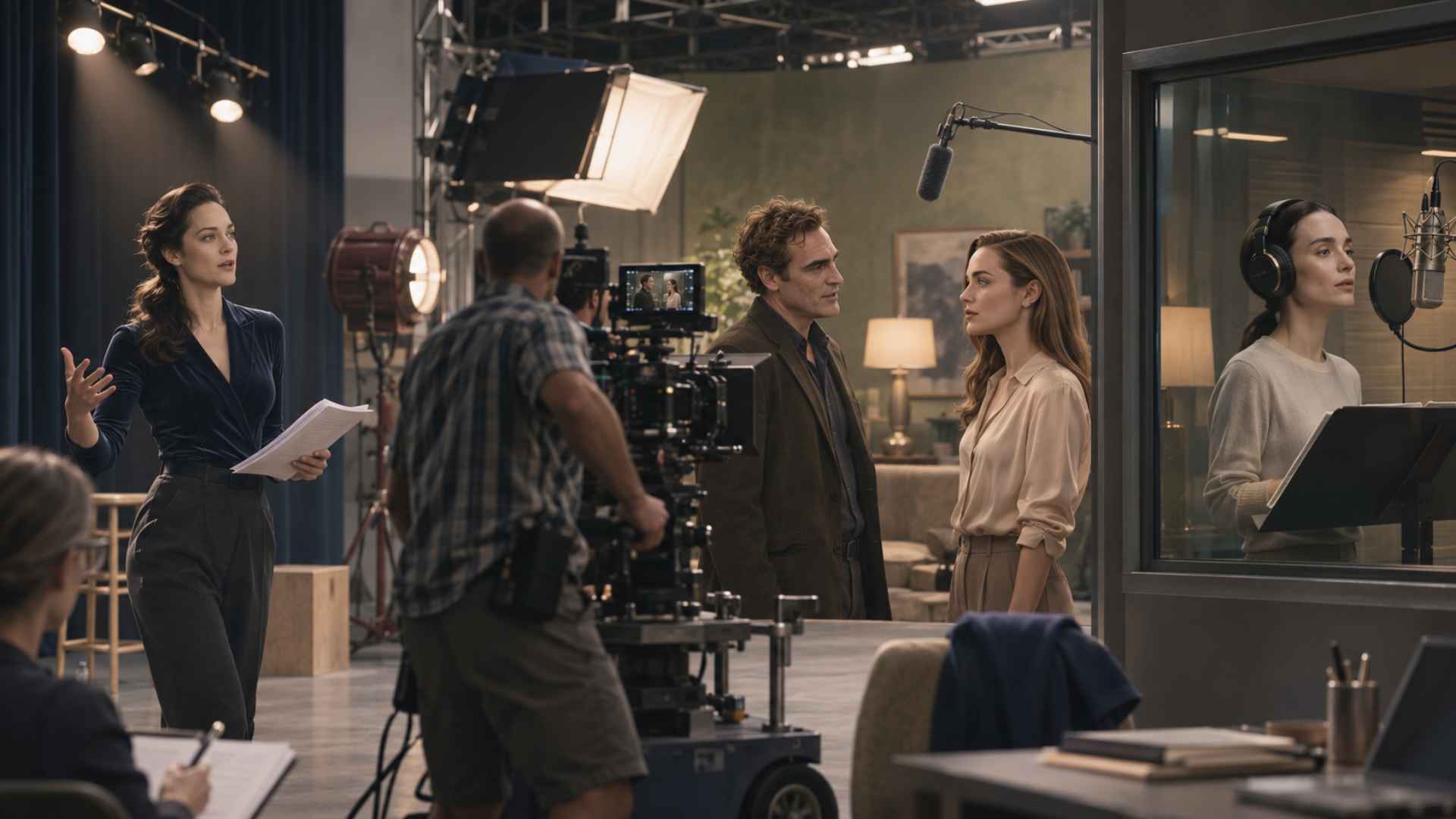
Professional acting careers rarely follow a single route. Performers may begin in local theatre, move into television or film, record dialogue for animation, or combine spoken roles with musical performance. Each setting calls for different technical abilities, yet all depend on credible character interpretation, preparation, and collaboration. Career development therefore involves more than collecting credits. Actors must learn to adapt their craft to unfamiliar production conditions while maintaining a consistent standard of work, whether performing before an audience or recording alone in a studio.
Employment data also shows why flexibility matters. According to the U.S. Bureau of Labor Statistics, actors held approximately 67,500 jobs in the United States in 2025, and 23 percent of those jobs were classified as self employment. Acting assignments often last from a single day to several months, with part time schedules common. These figures describe the American labor market rather than the entire international industry, but they illustrate an important reality: professional performers frequently manage careers built around separate projects instead of continuous employment.
Performance Skills Across Different Media
Theatre provides direct experience with character development, ensemble work, and sustained concentration. Unlike a filmed scene, a stage performance generally unfolds without the opportunity to stop and repeat a line. Actors must project clearly, respond to other performers in real time, and maintain a character’s emotional progression throughout the production. Rehearsals also establish habits of script analysis, listening, and responsiveness to direction. Such skills can remain useful when actors shift to productions where scenes are recorded out of narrative order.
Film and television place greater emphasis on camera framing, continuity, and subtle physical choices. Recorded performances may require several takes, changes in camera position, and consistent actions between shots. Voice roles introduce different constraints: a dubbing actor must preserve the emotional intention of a scene while fitting translated dialogue to its available timing. Animation and games may involve recording without another cast member present. Training in singing or vocal technique can contribute breath control, articulation, and vocal stamina, although specialist voice acting still requires practice with microphones and studio direction.
Auditions, Credits, and Professional Materials
Auditions are a recurring part of professional work, making accurate presentation materials important. A performance résumé normally identifies relevant credits, training, languages, and practical abilities without implying experience the actor does not possess. Headshots should represent the performer’s current appearance, while a showreel should allow casting professionals to assess actual acting rather than elaborate editing. Separate clips can be appropriate for stage related material, screen scenes, and voice performances because each demonstrates a different aspect of the craft. Clear labeling also makes older credits easier to place in their historical context.
Self taped auditions have become an established option in film and television casting. Basic production quality involves intelligible sound, reliable framing, suitable light, and close attention to submission instructions. Professional expectations also include awareness of contractual rules. Under SAG AFTRA’s 2023 television and theatrical agreements, invited adult performers generally must receive at least 48 hours to prepare a self tape, excluding weekends and holidays, subject to specified exceptions. First self tapes are normally limited to eight pages of scripted material under those provisions. Such protections are contract specific and should not be assumed to apply to every production or country.
Employment Conditions and Long Term Career Planning
Financial planning is part of maintaining an acting career. The U.S. Bureau of Labor Statistics reported a median hourly wage of $29.05 for actors in May 2025, but that figure is not equivalent to a guaranteed full time salary. Work can be intermittent, and unpaid periods may occur between engagements. The same agency projects little or no change in actor employment from 2025 to 2035, while estimating roughly 6,300 openings annually, largely as workers leave the occupation. These numbers highlight the difference between opportunities for individual roles and stable year round earnings.
Contracts deserve attention alongside artistic preparation. Performers should review agreed fees, rehearsal obligations, usage rights, credit arrangements, and the permitted reuse of recorded performances. Dubbing, commercials, theatre, and audiovisual productions may operate under different agreements and compensation structures. Language skills can expand the types of productions for which an actor is considered, but fluency alone does not establish suitability for a role. Accents, timing, character requirements, and directorial expectations all remain relevant. Accurate records of engagements and payments also support tax reporting and future professional applications.
Sustained progress depends on evaluating work over time rather than treating a single audition as a measure of ability. Actors can maintain current performance samples, document completed productions, and seek feedback from qualified collaborators. Periodic training may address specific needs, such as camera technique, dialect work, text interpretation, or vocal health. Equally important is recognizing the boundaries between different disciplines: experience on stage does not automatically replace recording practice, and musical training does not remove the need for dramatic interpretation. An adaptable career is built through verified credits, reliable conduct, and continued attention to the demands of each medium.